

Sanding Painted Floorboards in Brighton: A Specialist Restoration Guide
Is that thick layer of dark, flaking paint on your hallway floor a period feature worth keeping, or is it simply a barrier between you and a masterpiece of original timber? For many homeowners in our seaside city, the prospect of uncovering what lies beneath decades of gloss can feel more like a gamble than a renovation project. You might worry that the wood is too damaged to save, or perhaps you're rightfully concerned about the health implications of disturbing lead-based finishes in an older property.
We understand these anxieties completely; no one wants their home engulfed in fine dust or toxic particles. This guide will show you how sanding painted floorboards in Brighton can be a clean, safe, and highly rewarding process when handled with the right expertise. We'll walk you through the specialist methods used to strip away old coatings whilst protecting your air quality, ensuring you achieve a professional finish that adds significant character and value to your home.
Key Takeaways
Understand why Brighton's Regency and Victorian homes often have stubborn paint build-up on floorboard edges and how to identify what lies beneath.
Discover why professional-grade machinery is essential for sanding painted floorboards Brighton to prevent friction heat from melting old finishes into the timber.
Learn the critical safety protocols for managing lead paint found in older properties to ensure a dust-free and non-toxic restoration for your family.
Explore the benefits of using traditional wood slithers for gap filling to create a structurally sound, draught-proof, and aesthetically pleasing floor.
See how 18 years of local expertise from a family-run specialist team can transform damaged boards into a high-value asset for your property.
Table of Contents
The Unique Challenge of Sanding Painted Floorboards in Brighton Homes
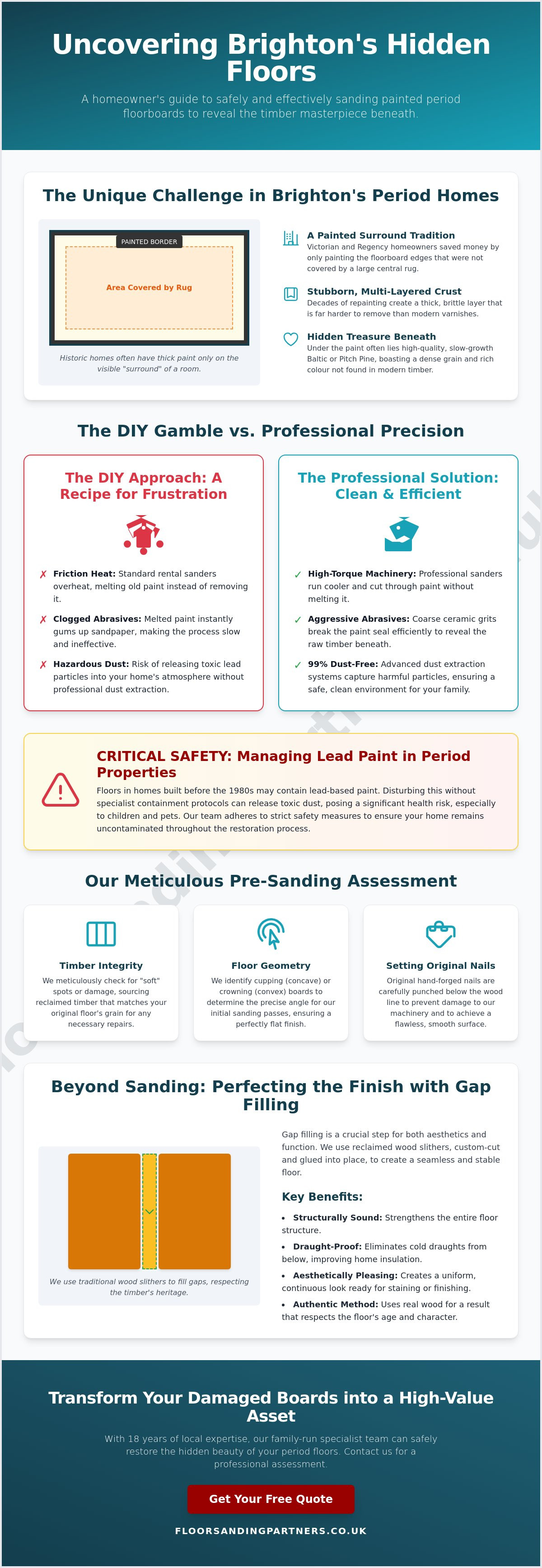
If you live in one of Brighton’s historic Regency or Victorian terraces, you’ve likely discovered a strange phenomenon under your old carpets. You'll often find a dark, thick border of paint around the perimeter of the room, whilst the centre remains bare or lightly stained. This wasn't an accident. It was a common tradition where homeowners would only paint the "surround" that was visible, leaving the middle section unfinished to save money on materials since it would be covered by a large central rug. Over the decades, these edges have been repainted countless times, creating a stubborn, multi-layered crust that is far more difficult to remove than modern varnishes.
The layers of old floor paint found in Brighton properties are often brittle and thick. When you attempt a DIY approach, the friction from a standard rental sander generates heat, which quickly melts this old paint into the sanding belt. This clogs the abrasive grit instantly, making the process frustrating and incredibly slow. There is also the significant risk of encountering historical finishes that contain toxins. Understanding the dangers of lead paint is essential before you begin, as disturbing these layers without professional-grade dust extraction can release hazardous particles into your home's atmosphere.
However, the reward for a methodical restoration is immense. Beneath those unsightly black or brown borders lies high-quality, slow-growth pine. This timber is much denser and more durable than the fast-grown pine used in modern construction, offering a tight grain and rich colour that simply cannot be replicated today. Sanding painted floorboards Brighton requires a professional eye to assess if the timber is structurally sound enough to reveal this hidden beauty.
Why Brighton’s Period Properties Require a Specialist Touch
Local homes typically feature Baltic Pine or pitch pine, materials that have spent over a century acclimatising to our specific seaside humidity. This salt-heavy air can affect how paint adheres to the wood, sometimes causing it to bond more deeply into the grain. A "quick-fix" sanding job often fails because it doesn't account for the way these heritage woods move. We use a sympathetic approach that respects the age of the timber whilst ensuring every trace of old pigment is removed without thinning the boards unnecessarily.
Assessing the Condition of Your Painted Boards
Before we start sanding painted floorboards Brighton, we conduct a thorough assessment of the floor's geometry. We look for specific issues including:
Cupping and Crowning: Identifying where boards have curved due to moisture or age, which dictates the angle of our initial sanding passes.
Hand-Forged Nails: Original Victorian nails are often proud of the surface. These must be carefully set below the wood line to avoid damaging our machinery and ensuring a flush finish.
Timber Integrity: We check for "soft" spots that might indicate the need for repairs using reclaimed timber to match your original grain.
Our Professional Process for Removing Heavy Paint and Grime
Removing old gloss or lead-based paint isn't just about abrasion; it's about temperature control. Most hire-shop machines use a drum that spins at high speeds but lacks the torque to maintain a steady cut through thick, stubborn paint. This creates friction. Friction creates heat. The result is that the paint melts and fuses into the sandpaper, leaving you with a useless, gummed-up belt within seconds. When we undertake sanding painted floorboards Brighton, we use high-torque, professional-grade belt sanders that keep the surface cool whilst aggressively stripping away decades of grime.
This process requires a methodical approach. We start with extremely coarse ceramic abrasives to "break" the paint seal. It's a loud, heavy-duty phase, but it's the only way to reach the raw timber without damaging the grain. For tricky areas like corners and fireplace hearths, we switch to specialised edging tools that provide the same power in a compact form. If you're concerned about the safety of this process, we follow strict protocols and recommend reviewing EPA lead-safe work practices to ensure your living space remains uncontaminated during any renovation.
The 5-Stage Paint Removal Sequence
We don't believe in shortcuts. Our sequence ensures the timber is treated with respect whilst achieving a flawless result:
Step 1: Preparation. We set every nail head below the surface to protect our machinery and ensure a smooth, snag-free finish.
Step 2: The First Cut. Using 24 or 36-grit ceramic belts, we strip the paint back to the bare wood, removing the bulk of the old finish.
Step 3: Intermediate Sanding. We use medium grits to level the boards and remove any remaining flecks of pigment or surface imperfections.
Step 4: Fine Sanding. This stage smooths the wood grain, preparing it to absorb your chosen finish evenly and deeply.
Step 5: Buffing. A final pass with a rotary buffer ensures a perfectly uniform surface across the entire room, ready for sealing.
Equipment Matters: Why Industrial Machinery Wins
There's a significant difference between a rental drum sander and our professional continuous-belt machines. Rental gear often leaves "chatter marks", which are small, repetitive ripples that only become visible once the lacquer is applied. Our equipment is balanced and heavy, preventing uneven gouging in soft pine. Because we value your home's cleanliness, our machines are fitted with powerful extraction systems that capture dust at the source. If you'd like to see the difference professional equipment makes, you can learn more about our Floor Sanding in Brighton and Hove services.
Managing Lead Paint and Dust in Period Properties
Brighton’s Regency squares and Victorian terraces are architectural gems, but they come with hidden histories. If your home was built before the 1960s, there’s a very high probability that the deep layers of paint on your floorboards contain lead. When undertaking sanding painted floorboards Brighton, these toxins can become airborne if not managed with professional care. Floor Sanding Partners Ltd takes this responsibility seriously. Our team operates in strict accordance with the Control of Lead at Work Regulations 2002, ensuring that every restoration is as safe for your family as it is for our craftsmen.
We use an advanced, industrial-grade dust extraction system that captures 99.8% of particles at the point of contact. This isn't just about avoiding a messy house; it's a matter of respiratory health. Traditional sanding methods can leave fine dust in your curtains, upholstery, and even inside your electronics for months. Our "dustless" approach means your newly redecorated walls stay clean and your air remains breathable. Whilst we don't offer a furniture moving service, we always advise clearing the room completely before we arrive. This allows our machines full access to the perimeter where, as mentioned previously, the paint build-up is often at its thickest.
Lead Paint Safety Protocols
During our initial assessment, we look for tell-tale signs of lead-based finishes, such as a distinct "crocodile skin" flaking pattern. If we suspect lead is present, we utilise HEPA-filtered extraction units specifically designed to trap microscopic toxic particles. One vital piece of advice: never attempt to remove old Brighton floor paint with a heat gun. Heating these historical finishes can release toxic lead fumes. These are far more dangerous to inhale than dust. We rely on cold-cutting mechanical methods that keep the material stable and safely contained within our filtration units.
The Benefits of Dustless Sanding
Choosing a dust-free restoration provides peace of mind that extends beyond the physical floor. For households with asthma sufferers or pets, it eliminates the primary trigger of post-renovation irritation. Our methodical approach ensures that the fine particulate matter generated during the stripping phase never has a chance to settle in your home.
Furnishing Protection: You won't need to spend hours wrapping every picture frame or book in plastic sheets.
Faster Turnaround: Because there’s no settling dust to clear, we can apply the first coat of sealant immediately after the final buff.
Healthier Environment: Our process ensures that fine particulate matter doesn't settle in your ventilation or soft furnishings, protecting sensitive paws and noses.
By prioritising these safety measures, Floor Sanding Partners Ltd ensures that sanding painted floorboards Brighton is an exciting transformation rather than a stressful event. We treat your property with the same care we would our own, leaving behind nothing but a beautifully restored floor and a clean, safe living space.
Beyond the Sanding: Gap Filling and Choosing the Right Finish
Once the layers of historical paint are removed, you'll likely notice significant gaps between the boards. Decades of central heating have caused the original timber to shrink, leaving voids that collect dust and let in cold air. While many general builders might suggest a resin and sawdust mix, this rarely lasts. Wood is a living material that expands and contracts. Resin is brittle; it eventually cracks and falls through the gaps as you walk across the floor. This is a common frustration for homeowners who attempt a DIY approach or hire non-specialists.
We prefer a more permanent, structural solution. Our signature method for sanding painted floorboards Brighton involves using traditional wood slithers. These are tapered strips of reclaimed pine that we glue and wedge into the gaps. Once dry, we sand them flush with the rest of the floor. This creates a seamless, solid surface that mimics the original construction. Slither filling also eliminates draughts and improves the thermal efficiency of your room.
Gap Filling: Slithers vs. Resin
Using reclaimed pine slithers allows us to match the colour and grain of your existing floorboards with precision. The process is meticulous. We apply high-quality wood glue to both sides of the slither, tap it firmly into place, and then allow it to bond before the final sanding stages. This results in a repair that moves in harmony with your floor, providing a long-term fix that resin simply cannot match. If you want a floor that feels as solid as it looks, our Gap Filling Using Wood Slithers service is the gold standard for period property restoration.
Choosing Your Finish: Varnish vs. Oil
The final decision is how to protect your newly revealed timber. For high-traffic Brighton hallways, we often recommend water-based lacquers (varnishes). These modern finishes are incredibly durable, low-maintenance, and don't yellow over time. They provide a tough "seal" that's perfect for busy households. If you prefer a more traditional, tactile feel, hardwax oils are an excellent choice. They penetrate deep into the grain, bringing out the rich warmth of the pine whilst remaining easy to spot-repair if a scratch occurs. For those who love the "raw" look of freshly sanded wood, we can apply "invisible" finishes that protect the timber without darkening its natural, pale colour.
Why Trust Floor Sanding Partners Ltd with Your Brighton Floor Restoration?
When you choose a specialist for sanding painted floorboards Brighton, you aren't just hiring a service; you're inviting craftsmen into your home. Floor Sanding Partners Ltd is a family-run business led by Tony and Kamber. We believe in direct, personal communication. You won't be dealing with a remote call centre or a sub-contracted crew. Instead, you get the benefit of over 18 years of experience specifically focused on the unique timber floors found throughout Brighton and Hove.
Our reputation is built on honesty. Sometimes, a floor is simply too damaged, thin, or structurally compromised to survive another sanding. If we believe a restoration won't provide the long-term value or safety you deserve, we'll tell you upfront. We value the integrity of the craft over high-pressure sales tactics. This transparency ensures that every project Floor Sanding Partners Ltd undertakes results in a stunning, durable finish that adds genuine character and value to your property.
Disruption is a major concern for any homeowner. We organise our workflow meticulously to ensure the process is as smooth as possible. From the initial stripping of the paint to the final buffing, we work steadily and cleanly, respecting your space at every stage. Our methodical approach means we stay on schedule, allowing you to return to your normal routine with a transformed living space.
Our Local Reputation in Brighton and Hove
Brighton’s architecture is diverse. From the grand Regency townhouses to smaller Victorian cottages, each property style presents different challenges. Our deep local knowledge allows us to make better restoration choices, whether that's selecting the right reclaimed timber for repairs or choosing a finish that handles the specific coastal humidity of Sussex. Floor Sanding Partners Ltd focuses on craftsmanship over volume. We take the extra time needed to get the edges and corners right, ensuring that the transition between the old "rug surround" and the centre of the room is invisible. You can view our professional floor sanding services in Brighton to see the breadth of our expertise across the city.
Start Your Floor Transformation
Ready to reveal the timber hidden beneath your paint? Every project begins with a transparent, expert assessment. During our initial site visit, Tony or Kamber will examine the condition of your boards, check for any historical damage, and discuss the best finish for your lifestyle. We provide a detailed, clear quote so you know exactly what to expect. There are no hidden surprises. We want you to feel confident and informed before any work begins. Contact Tony and Kamber today to discuss your project and take the first step toward a beautifully restored period floor.
Ready to Reveal Your Home’s Hidden History?
Uncovering the original timber beneath decades of gloss paint is one of the most transformative changes you can make to a Brighton home. By prioritising safety through dustless extraction and using traditional methods like wood slither gap filling, you ensure your floor remains a high-value asset for years to come. We've spent over 18 years refining our craft, helping local families move from flaking, dark borders to stunning, natural pine surfaces that breathe life into period properties.
As a family-run business in the heart of Brighton & Hove, we take immense pride in our honest, meticulous approach. We don't believe in shortcuts or brittle resin fillers; we believe in restoration that respects the history of your home. If you're ready to see if your floor is a candidate for sanding painted floorboards Brighton, we're here to guide you through every step of the process with technical expertise and local care.
Request a professional floor assessment from Tony and Kamber today to start your restoration journey. Your original floorboards have waited decades to be seen again. Let's make sure they are revealed with the precision and craftsmanship they deserve.
Frequently Asked Questions
Is it worth sanding painted floorboards in a Victorian house?
Yes, it is almost always worth it because Victorian properties typically feature dense, slow-growth pine that is far superior in quality to modern timber. Once you remove the old paint, you reveal a durable, high-quality surface that adds significant value and historical character to your home. We'll assess the structural integrity during our initial visit to ensure the boards are thick enough for a successful and lasting restoration.
How much dust does sanding painted floorboards actually create?
Professional sanding painted floorboards Brighton creates very little mess because we use industrial-grade dust extraction systems. These machines capture approximately 99.8% of particles at the source, preventing fine dust from settling on your walls or soft furnishings. This "dustless" method is a world away from the clouds of grit produced by standard rental equipment, making the restoration process much cleaner and safer for your household.
Can you sand floorboards that have been painted with lead paint?
Yes, you can sand boards with lead paint, but it must be handled by specialists using HEPA-filtered extraction to manage the toxins. We follow strict safety protocols to ensure every microscopic particle is contained and safely removed from your home environment. You should never attempt to DIY sand or heat-strip these older finishes, as disturbing lead without the correct industrial filtration can pose serious health risks to your family.
How long does it take to sand and refinish a painted room?
An average-sized room usually takes between two and three days to fully sand, gap-fill, and refinish. The first day is dedicated to the heavy-duty stripping of the paint layers and any necessary structural repairs. The following days involve fine sanding, buffing, and the application of multiple coats of lacquer or oil, including the essential drying time required between each stage of the process.
Will the gaps between my floorboards be visible after sanding?
The gaps won't be visible if you opt for our traditional wood slither filling service. We wedge tapered strips of reclaimed pine into the voids and sand them flush, creating a solid, uniform surface that looks original to the house. This method not only improves the appearance of the floor but also eliminates draughts and prevents dust from accumulating between the boards over time.
Do I need to move all my furniture before the floor sanders arrive?
Yes, the room needs to be completely clear of all furniture, rugs, and curtains before we arrive to start the work. This allows our machinery full access to every inch of the floor, including the edges where paint build-up is often at its heaviest. Whilst we don't offer a furniture moving service ourselves, having an empty space ensures we can maintain a steady workflow and achieve a perfectly consistent finish.
Can I stay in the house whilst my painted floorboards are being sanded?
You can certainly stay in the house, but you won't be able to walk on the floorboards whilst we are working or whilst the finish is drying. We plan our routes carefully to ensure you can still access essential areas like the kitchen or bathroom wherever possible. However, you'll need to keep pets and children away from the work zone to maintain safety and protect the wet sealant.
What is the best finish for old pine floorboards in a busy family home?
A high-quality water-based lacquer is usually the best choice for busy family homes in Brighton. It provides a tough, durable seal that resists scratches and spills whilst remaining very easy to maintain with a damp mop. Modern lacquers are non-yellowing, which ensures your original pine boards retain their natural, airy aesthetic even in high-traffic areas like hallways or living rooms.


Comments